- Find a Provider
-
Services
-
Redeemer Health provides compassionate care across every stage of life.
- View all Services
-
- Patients & Visitors
- Locations
- Careers
categories:


— Authored by Michael (Mickey) Rachshtut, MD, Chief, Division of Hematology and Oncology, and Director, Hemostasis and Thrombosis Program, Redeemer Health Cancer Center
Lung Cancer Awareness Month shines a light on the importance of early detection, especially because lung cancer often does not cause symptoms in its early stages. For people at higher risk, a low-dose CT (LDCT) scan can find changes in the lungs early, when treatment may be most effective.
Screening eligibility depends mainly on your age and smoking history. If you qualify, your doctor can order the scan. It's quick and painless, requires no needles, and uses much less radiation than a standard CT.
If the scan finds a lung nodule, that doesn't necessarily mean cancer. Further evaluation can help determine the right next step.
Studies have shown that screening high-risk adults with low-dose CT can reduce lung cancer mortality by about 20%.
Who Should Be Screened for Lung Cancer?
You may be a candidate for an LDCT scan if you:
- Are between 50 and 80 years old
- Have a 20 pack-year smoking history (for example, one pack a day for 20 years or two packs a day for 10 years)
- Currently smoke or have quit within the last 15 years
Other Risk Factors to Discuss with Your Doctor
Even if you don’t meet all of the above criteria, other factors can raise your risk. Talk with your doctor if you:
- Have been exposed to secondhand smoke, radon gas, asbestos, or other cancer-causing substances
- Have a family history of lung cancer
- Have had previous radiation therapy
If any of these apply to you or someone you love, start with a conversation with your primary care physician. Together, you can review your health history and decide whether screening is right for you.
If you smoke, it’s never too late to quit. Stopping now can still have meaningful benefits for your lungs and your health. Have questions? Call 215-938-LUNG (5864).
What Happens if a Lung Nodule is Found?
Hearing the word “nodule” can be unsettling, but many lung nodules are benign. What matters most is making sure the finding is carefully evaluated so that you and your care team can understand the best way forward.
If a lung nodule is found during screening, follow-up care may include additional evaluation, diagnosis, and management. At Redeemer Health, this care is coordinated through the Integrated Lung Nodule Program.
Here's what you can expect:
- Connection to the right team right away. If your LDCT scan finds a high-risk nodule, you'll be referred to the program for timely follow-up.
- A team of specialists reviewing your case. Pulmonary specialists, interventional radiologists, thoracic surgeons, and lung cancer specialists work together to decide whether you need additional testing or continued monitoring.
- Advanced biopsy options, if needed. Ion robotic-assisted bronchoscopy can reach nodules in all areas of the lung with precision. CT- and ultrasound-guided biopsies target nodules accurately, with minimal discomfort.
- A care plan built around you. Your personalized plan may include monitoring, a minimally invasive procedure, or treatment through Redeemer Health Cancer Center. Whatever your results, you’ll have a precise diagnosis and ongoing support for peace of mind.
A Clearer Picture of Your Lung Health
A low-dose CT scan can provide clearer information about your lung health. Whether your result is normal or shows a small finding that needs follow-up, screening can help you and your doctor make informed decisions about next steps.
This Lung Cancer Awareness Month, consider talking with your doctor about whether screening is right for you or someone you love. If you have a history of smoking or other risk factors, that conversation could be an important first step.
To learn more about lung cancer screening at Redeemer Health, visit RedeemerHealth.org/Lung-Cancer-Screening or call 215-938-LUNG (5864).
Expert Care for Lung Cancer, Close to Home
Redeemer Health’s lung cancer program holds national accreditation through the GO2 Foundation for Lung Cancer’s Care Continuum Center of Excellence. It is also recognized by the Lung Cancer Alliance as a Screening Center of Excellence. Click here to learn more.
About the Author
Dr. Michael (Mickey) Rachshtut is Chief, Division of Hematology & Oncology, and Director, Hemostasis and Thrombosis Program, at Redeemer Health Cancer Center. Affectionately known as "Dr. Mickey," he combines clinical expertise with a personal approach, helping patients understand their diagnosis and treatment options. With access to a comprehensive cancer team delivering expert care close to home, Dr. Rachshtut ensures his patients receive seamless, individualized care every step of the way. He is board certified in medical oncology and hematology and is fluent in English, Hebrew, and Russian. Learn more about Dr. Rachshtut here.
topics in this article
categories:
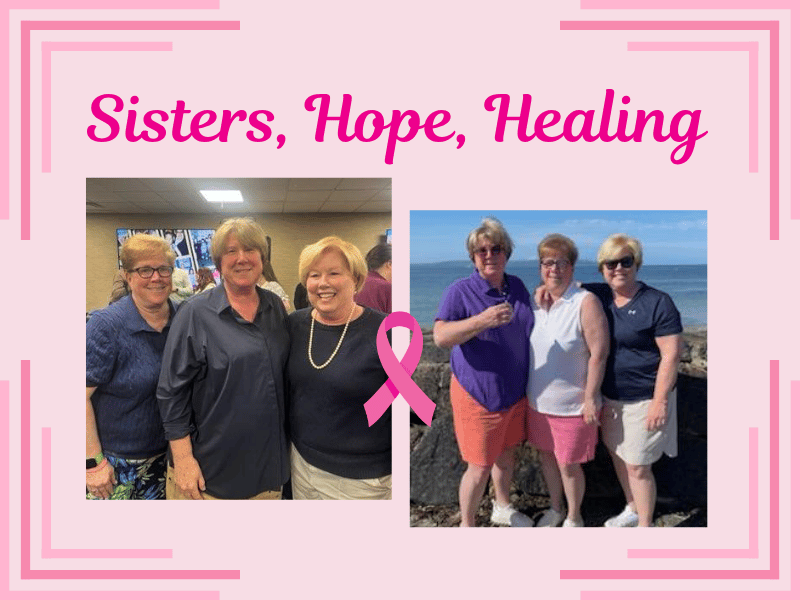
Patti and Mary have always shared the close bond between sisters in a big, close-knit family—one built on love, faith, and showing up for each other. They never imagined they would be facing breast cancer at the same time or ringing the bell side-by-side to mark the end of their treatment.
Patti's Story
Patti was diagnosed on her 65th birthday. When her annual mammogram raised concerns, an ultrasound-guided biopsy by Anna Mazor, DO, Breast Surgeon at Comprehensive Breast Care Surgeons, confirmed she had ER/PR-positive (estrogen receptor-positive, progesterone receptor-positive) and HER2/neu-negative breast cancer, with three tumors, including one in her lymph nodes.
Though the news was overwhelming, Patti found comfort in a familiar face. Having seen Dr. Mazor the year before for a ruptured sebaceous cyst, she felt an immediate reassurance.
“I wouldn’t have been as comfortable or confident with anyone else,” Patti said. “Dr. Mazor is incredibly smart, empathetic, and supportive. From the very beginning, she made me feel like she was personally committed to helping me heal.”
Once the diagnosis was confirmed, the nurse navigators coordinated everything from tests and imaging to prescriptions, follow-up visits, and pre-surgery clearance, allowing Patti to focus on healing, her family, and her sister, who would soon be walking a similar path.
Reflecting on that time, Patti fondly recalls: “Teresa, our nurse navigator, was like an orchestra conductor behind the scenes, working quietly in the background, coordinating so many moving pieces and making everything work together seamlessly.”
That fall, Patti had a single mastectomy performed by Dr. Mazor, with the closure performed by Stacey DonFrancesco, DO, Director of Plastic and Reconstructive Surgery at Redeemer Health.
After surgery, Patti completed four rounds of chemotherapy followed by multiple weeks of radiation treatment. She then began antihormonal therapy, working with her care team to find the options her body would tolerate best, including exploring a targeted therapy.
Although Patti never developed lymphedema, the team recommended lymphedema therapy as part of her recovery and prevention. This became an important part of her healing, improving her range of motion and helping her regain strength, mobility, and confidence. Patti never considered going elsewhere, not even for a second opinion at one of the larger institutions where she had personal connections. Today, she remains confident in her decision.
Mary's Story
Mary was diagnosed just weeks before Patti’s surgery. Four months overdue for her annual mammogram, and in light of Patti’s diagnosis, she decided putting it off was no longer an option. Three days after her mammogram, her nurse practitioner at Redeemer Health’s OB/GYN practice, called Mary to let her know she would need an ultrasound followed by a biopsy due to suspicious findings.
Stacy Krisher, MD, Director of the Breast Health Program at Redeemer Health, performed the biopsy. Naturally, Mary was anxious, even more so because of her sister’s breast cancer diagnosis. She remembers Dr. Krisher asking whether she would prefer to see Dr. Mazor, who was overseeing Patti’s care. But after meeting Dr. Krisher during the biopsy, Mary immediately knew she was the right surgeon for her, and any uncertainty faded.
Mary admitted, “Dr. Krisher’s straightforward way was exactly what I needed. She keeps you in check and tells you exactly how you’re going to work together to get it done.”
Patti accompanied Mary to her follow-up appointment for the biopsy results. She remembers telling Mary there were only two words she didn’t want to hear: “triple negative.” Unfortunately, that was the diagnosis Dr. Krisher delivered; just days before Patti’s surgery.
A few weeks later, Mary underwent a lumpectomy on her left breast, performed by Dr. Krisher, along with a breast reduction on the right as part of her reconstruction, which was done by Dr. DonFrancesco. Before surgery, Mary was told she would likely need chemotherapy and radiation. Mary shared that she had an intense fear of chemotherapy, but Dr. Krisher reassured her and told her she would get through it.
After surgery, pathology revealed that her lymph nodes were clear, with the final tumor measuring 8 mm in size. Following an extensive discussion with the Medical Oncology team, Mary learned that chemotherapy was unlikely to provide significant benefit. She then completed several weeks of radiation without experiencing notable fatigue or skin reactions, allowing her to continue working and maintain her normal routine during treatment. She continues to be closely monitored at regular intervals, as her care team supports her through recovery.
Facing it Together: A Shared Journey
Patti and Mary are deeply grateful for the compassionate, expert care they received at Redeemer Health Cancer Center.
From Sheena Jain, MD, Medical Director of Radiation Oncology, and Rabia Cattie, MD, Director of Breast Medical Oncology, to the infusion and radiation oncology nurses, front-desk staff, lymphedema therapists, nurse navigators, and many others, they felt surrounded by compassion and support throughout their journey.
Along the way, Patti and Mary leaned on the love and support of their family. Their younger sister, in particular, became a steady source of calm, holding the family together and hosting Thanksgiving, Christmas, and every holiday in between while Patti and Mary moved through treatment. Both continued to balance their demanding jobs with grace and resolve, scheduling radiation sessions during lunch breaks or early mornings before work.
“The level of care we received never diminished. From the moment of diagnosis, with exceptionally skilled surgeons and oncologists, through every stage of treatment, Redeemer Health’s commitment to us, our therapy, and our recovery remained steady and unwavering. It was personal. The care wasn’t just patient-centered. It was personally-centered.”
Patti and Mary admit the full scale of all they have experienced still hasn’t fully sunk in. In many ways, facing everything side-by-side has helped, with each being focused more on the other than on her own situation. Mary finished radiation two weeks before Patti did, but waited to ring the bell until Patti’s treatment was complete. On Patti’s last day of treatment, they stood side by side and rang that tiny bell, honoring the end of a meaningful chapter and celebrating how far they had come.
Click here to learn more about the Breast Health Program at Redeemer Health Cancer Center.
topics in this article
categories:
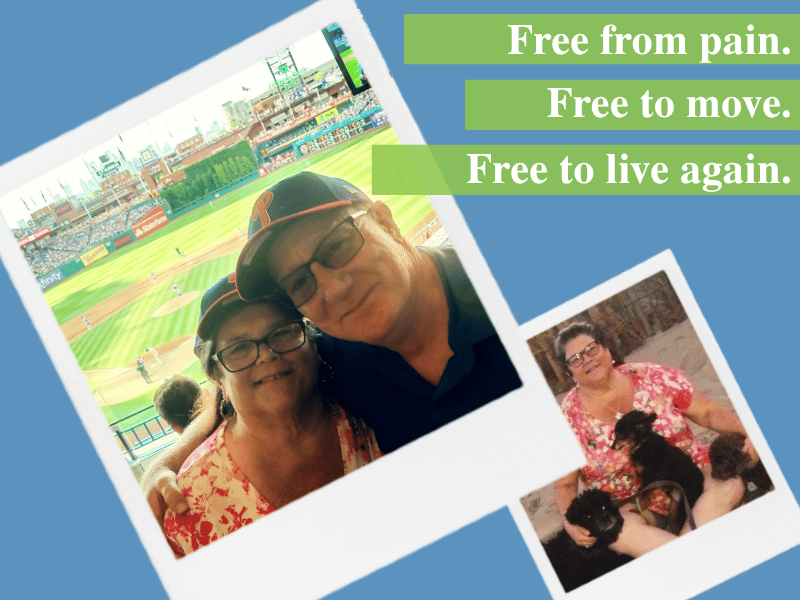
After nearly two decades of chronic pain, pain management, and reliance on medication, Lisa found life-changing relief through a minimally invasive peripheral nerve stimulator (PNS) and today, medication is no longer part of her daily life.
For much of her adult life, Lisa lived with chronic knee pain that steadily took a toll on her mobility, independence, and quality of life. In her 20s, she learned she had significant cartilage loss in both knees. Hoping to delay a partial or total knee replacement at such a young age, she underwent a tibial osteotomy on both legs. But lasting relief never came.
Instead, the years that followed were marked by persistent pain, limited mobility, and an increasing dependence on prescription medication. By her 50s, Lisa needed her first total knee replacement. As a realtor and associate broker whose work required constant movement—from walking properties to climbing stairs—she pushed through the pain as best she could. Still, everyday life was becoming harder to manage.
Lisa longed to once again go on hikes and get back to the gym to lift weights. The pain was not only physically exhausting, but emotionally draining as well. Instead, the pain had become a constant presence; physically exhausting, emotionally draining, and increasingly discouraging.
A few years after her first knee replacement, Lisa needed a second total knee replacement on her other knee. Although the surgery initially helped, the relief did not last. Before long, persistent discomfort and limited mobility once again made even routine activities a challenge.
Repeat X-rays showed she did not need revision surgery, but that only deepened her frustration. She was still hurting, still relying on pain medication, and still searching for answers.
The medications left her feeling foggy and unsteady, and after so many years of procedures, appointments, and pain management, it began to feel as though this was simply the way life would be. At one point, one of her doctors compared her to “an old man on the porch complaining of war wounds.”
Everything changed when Lisa was referred to Dr. Yehuda “Yudi” Kerbel, with Orthopedic Surgery and Rehabilitation Associates (OSRA) at Redeemer Health. For the first time in a long time, she felt heard.
Dr. Kerbel really listened and took the time to understand what Lisa had been living with. He introduced her to a treatment option no one had previously offered: a peripheral nerve stimulator.
For patients who continue to struggle with chronic pain even after knee replacement, especially those who feel they have run out of options, PNS can offer a different path forward. The minimally invasive treatment works by targeting the nerves responsible for transmitting pain signals, helping reduce pain without the need for more major surgery.
After a successful lidocaine injection test, Lisa underwent a trial PNS implant, as an outpatient procedure. It took only 5 to 10 minutes, required no post-op downtime, and provided immediate relief. After years of pain and long-term reliance on medication, the results were almost hard to believe. Lisa knew right away she wanted to move forward with the permanent implant.
Just 10 days later, she received the permanent PNS, also as an outpatient procedure, which took about 10 to 15 minutes. Once it was in place, she again experienced immediate relief, with no post-op recovery limitations.
Today, Lisa no longer needs pain medication. After nearly two decades of pain management, she is off her pain meds completely. She has returned to the gym and is once again lifting 225 to 250 pounds on the leg press machines. She and her husband are back to hiking, with plans to visit every waterfall in a Pennsylvania hiking guidebook she recently purchased.
For Lisa, the treatment did more than ease her pain. It gave her a life that was no longer centered around pain, medication, and limitations. It gave her restored movement, clarity, confidence, and hope.
After experiencing such meaningful relief, Lisa is now continuing her care with PNS therapy to help manage diabetic neuropathy in her feet. After getting PNS on both ankles, her neuropathic pain is now gone as well.
Lisa says the treatment has completely changed her life. And for others living with chronic pain after knee replacement, especially those who have been told there are no good options left, her story is a powerful reminder that healing may still be possible.
Dr. Yehuda (Yudi) Kerbel is with Orthopedic Surgery and Rehabilitation Associates (OSRA) at Redeemer Health. To learn more, or to schedule an appointment, call 215-745-4050 or visit redeemerhealth.org/advanced-orthopedic-care.
categories:
Holy Redeemer Hospital received statewide recognition this month for outstanding performance in patient safety.
The Hospital and Healthsystem Association of Pennsylvania (HAP) recognized only 20 hospitals across the state this year in its 2026 Excellence in Patient Safety Recognition program. The recognition honors Pennsylvania’s top-performing hospitals that have demonstrated low rates of health care-associated infections.
“This recognition is testimony to the priorities of a team that puts safety above all else,” said Krzysztof Stypulkowski, DNP, MBA, RN, Health Care Delivery Patient Safety Officer at Redeemer Health. “Everyone at Holy Redeemer Hospital plays a role in safety, and it’s gratifying to see that many other organizations in Pennsylvania have the same priority.”
The HAP program examined performance from 2025. HAP identifies top-performing hospitals using data from the Centers for Disease Control and Prevention’s National Healthcare Safety Network. To be recognized, hospitals must perform better than the mean standardized infection ratio in three key measures: central line-associated bloodstream infections, catheter-associated urinary tract infections, and Clostridioides difficile infections.
“Hospitals are unwavering in their commitment to providing safe, high-quality care for the communities they serve,” HAP President and CEO Nicole Stallings said. “HAP is proud to recognize the leading Pennsylvania hospital teams that have embraced continuous quality improvement, strengthened patient safety, and achieved outstanding results through their dedication and hard work.”
categories:

Holy Redeemer Hospital has been named a center of excellence by GO2 for Lung Cancer (GO2) for its ongoing commitment to providing its community with cancer screenings and patient-centered, evidence-based lung cancer care.
According to GO2, centers of excellence are committed to the principles of patient-centered communication and decision making across the entire care pathway. They demonstrate access to standard cancer services within medical, radiation, and surgical oncology, and pathology. They follow practice standards based on evidence, expert consensus, and clinical guidelines, and they engage team-based mechanisms for multidisciplinary input to guide care and treatment recommendations and inform shared decision making.
Learn more about lung cancer care and other services available at Redeemer Health Cancer Center here.