- Find a Provider
-
Services
-
Redeemer Health provides compassionate care across every stage of life.
- View all Services
-
- Patients & Visitors
- Locations
- Careers
categories:

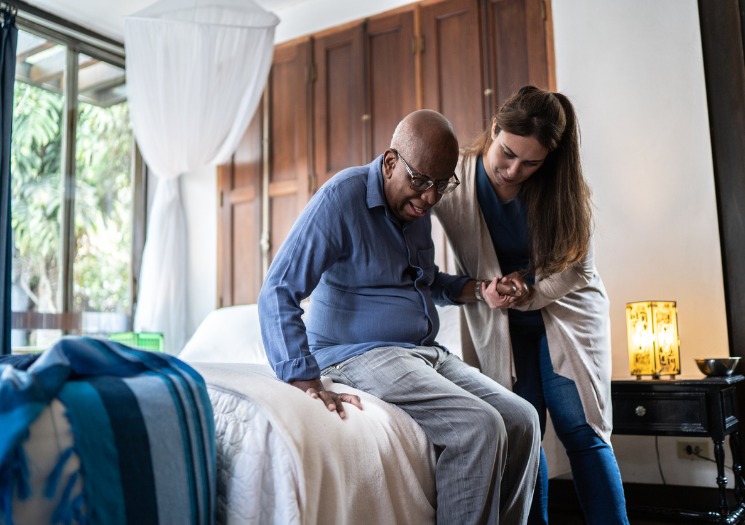
Are you looking to start a career in health care or looking for a second career doing something meaningful and helpful to others? Then becoming a Home Care Aide may be a great option for you!
Redeemer Health offers the Home Care Aide Training Program at no cost to the participant. Led by a registered nurse, the two-week class prepares students to help clients continue to live in their home with caring support.
Upon successful completion of the class, you will receive a Home Care Aide certificate and an opportunity to work at Redeemer Health as a Home Care Aide (applicants must also pass a physical and background check).
“If you want to go to work and feel like you have made a difference in someone’s life, becoming a Home Care Aide may be a great option for you,” says Kim Fitzsimmons, Vice President of Operations, Redeemer Health Support at Home.
Classes are a full day with a lecture in the morning and hands on skills teaching and practice in the afternoons. Throughout the training there are quizzes that recap information learned from the textbooks and previous lectures. At the end of the course, there is a comprehensive written exam and skills test. All of your books and supplies are included ($160 value).
You will learn the skills to be a successful Home Care Aide, including:
- The symptoms and progression of chronic illnesses and conditions, such as heart disease, lung disease, and Alzheimer's.
- How to provide personal care.
- How to safely move patients.
- And much more.
To qualify for the training program, you must:
- Commit to a full two weeks of attendance - there are no makeup classes.
- Have a driver's license.
- Have reliable transportation to visit patients.
Redeemer Health is proud to offer amazing benefits to new Home Care Aides, including:
- Competitive weekly pay
- Paid time off
- Medical and 403(b) Benefits
- Flexible hours and shifts
- Plus, we currently offer a sign-on bonus for new Home Care Aides
The Home Care Aide Training Program is an excellent way to jump start your career with Redeemer Health, and classes are held monthly. To sign up for an upcoming Home Care Aide Training program, visit the Redeemer Health Classes & Events page. You also can join our Talent Community to receive emails from Redeemer Health about training and open positions here.
categories:
George Vincent Sr., a retired firefighter and veteran, enjoyed golfing, dancing, socializing, collecting fish, and spending time with his family.
He also, like other members of the Surf Corvette Club, was passionate about the classic American sports car.
The club hosted a car show on June 6, 2021 at Waterman's Tavern in Brielle, N.J., to raise funds to donate to Redeemer Health's Home Care and Hospice Jersey Shore in George's memory.
George, who had lung cancer, received hospice care from Redeemer Health Hospice Jersey Shore. He passed away on March 8 at his Barnegat, N.J. home, surrounded by his loving family.
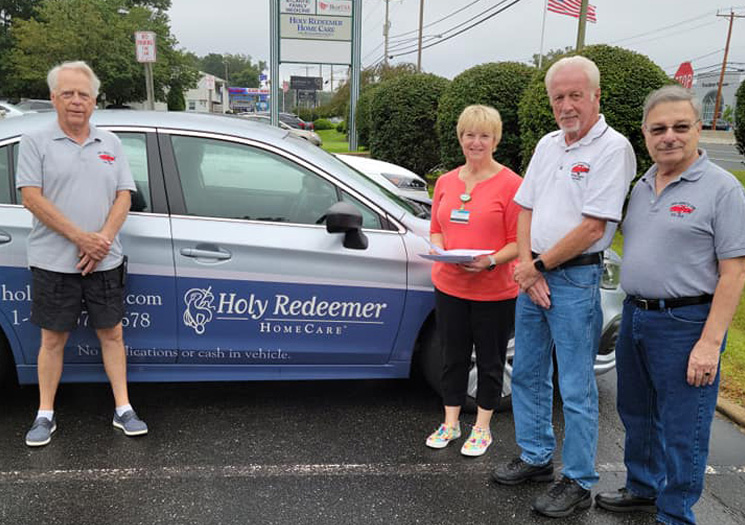
Surf Corvette Club President Don Hermann, Vice President Walt Nocella, Board of Directors member Tom Barnes and Nancy Conway presented a check to Nancy Faver, home care clinical manager with Redeemer Health Home Care and Hospice Jersey Shore, on Sept. 17.
George, formerly of Staten Island, N.Y., retired from the New York City Fire Department as a lieutenant. He was a proud veteran who served in the U.S. Navy. He graduated from McKee Technical High School and attended John Jay College of Criminal Justice in New York.
He is survived by his devoted wife of 52 years, Barbara Jean, and his loving children, brothers, and grandchildren.
Thank you to the Surf Corvette Club for your generosity in honor of George.
categories:
It started with tea.
When Marjorie May was living in Rydal Park, a Sister from Redeemer Health would visit and share news about Redeemer's mission to care, comfort and heal.
She also brought Marjorie tea. Those friendly visits helped inspire Marjorie to make a big decision.
As Marjorie searched for meaningful causes to support at year's end, her financial advisor suggested Redeemer. There was something special about a faith-based organization that resonated with Marjorie.
Marjorie's philanthropic legacy continues with her daughter, Nancy Copple.
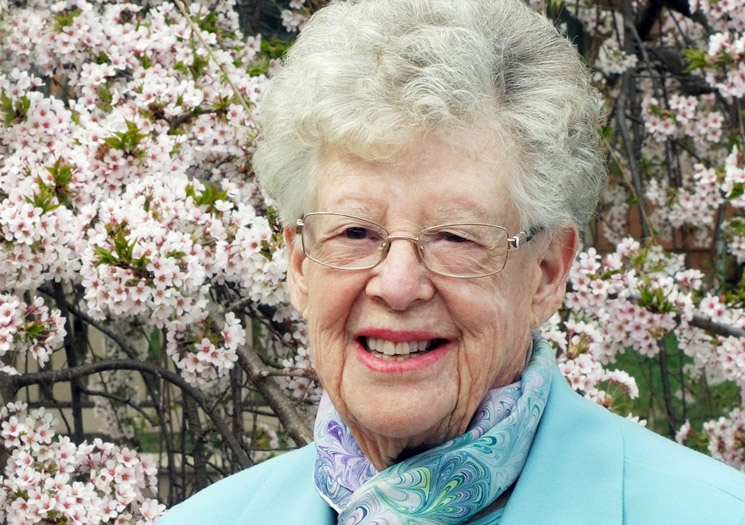
Nancy, now over 90 years old, grew up in the Elkins Park/Jenkintown area. Her uncle was a local physician and her mother was passionate about supporting Redeemer, including as a volunteer. Nancy herself had limited ties with the organization.
Then her husband, Norval, had a stroke.
"We were down in Ocean City, N.J., and he needed home care," Nancy recalled. "I'm not a nurse, though I tried. The Redeemer staff that came to our aid were absolutely wonderful."
Nancy noticed the home care workers assisting Norval did so with a level of compassion and dedication she had not seen before. These caregivers treated their profession as a calling, not just a job.
"I fell in love with Redeemer and all the aspects of that society down on the Jersey Shore," Nancy said.
During this time, the Copples also met a special Sister of the Redeemer, Sr. Mary Anne McDonagh, CSR. A woman with sparkling eyes who always smiled, Sr. Mary Anne is remembered by many as an energetic visionary and beautiful spirit who engaged people to accomplish monumental tasks in service to others.
"She was an example of how somebody should live," Nancy said.
Nancy decided to follow her mother's footsteps and donate to Redeemer each year.
"I know that I have been very blessed and I feel there is a need to give back," Nancy said.
Through her generosity, Nancy became a member of The Eppinger Society, named for Blessed Alphonse Maria Eppinger, founder of the Sisters of the Redeemer. Members make an annual gift to sustain the vision she began more than 200 years ago.
Nancy recently celebrated her 24th giving anniversary. She enjoys visits and conversations with members of our Philanthropy team, who update her on developments throughout Redeemer Health. That personal touch ties into Redeemer's core values of hospitality and stewardship, making her feel valued as a donor and helping her understand what is needed.
Redeemer uses Life Story Coaching to help people recognize and develop their talents and passions. Nancy's Redeemer chapter in her Life Story is summarized in her statement: "I hope that God will continue to bless all of you who serve at Redeemer. You're serving those in need in the name of God. What better cause could you dedicate your life to?"
We invite you to inspire others by getting involved and making a difference individually or with your family. Please contact the Redeemer Health Office of Philanthropy at
215-914-4000 or giving@holyredeemer.com, or visit www.redeemerhealth.org/giving/ways-give.
categories:
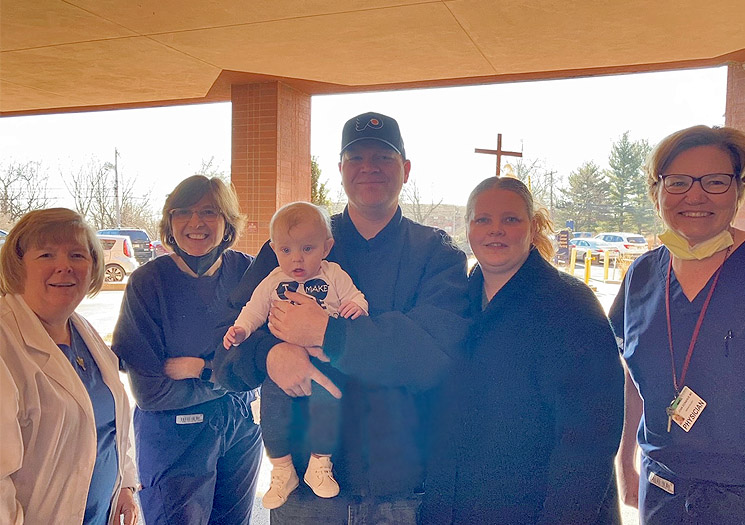
Hunter Michael was born unexpectedly at 1:50pm on January 14th, 2021. He was born at 24 weeks gestation weighing 1 pound 11 ounces and spent 127 days in Holy Redeemer's Neonatal Intensive Care Unit (NICU). This handsome little boy overcame many challenges and is now doing very well and meeting all of his milestones.
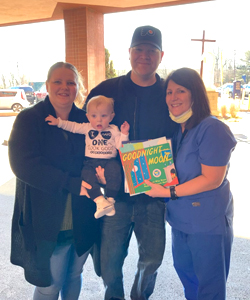 He recently celebrated his 1st birthday with family and friends. When asking his parents about their experience, they said "having a baby early is the scariest thing we have ever been through. The uncertainty that comes with every day was torture, but the NICU staff made all that bearable. They are the most amazing people and we wouldn't be where we are today without all of them. We are forever grateful.
While Hunter was there they would give us books to read to him since we couldn't hold or do much with him at first so that helped us bond. We just wanted to make sure other parents had that opportunity also. So for Hunter's 1st birthday we asked all of his guests to donate books in lieu of gifts to be donated to the NICU so other families could enjoy some bonding time with their little miracles also."
Happy birthday to Hunter and his family! Thank you for sharing your incredible journey and for the donation to the NICU!
If you would like to contribute to our NICU staff, families, and incredible patients like Hunter, please consider donating via our Amazon wish list.
categories:

Redeemer Health's commitment to Diversity, Equity, and Inclusion (DEI) consists of strategic priorities that exemplify our commitment and promote a workplace that upholds respect, fairness, empathy, and compassion for all.
"Our DEI commitment focuses on six key areas that were determined after conducting a comprehensive assessment examining our organizational culture behaviors, attitudes, values, and beliefs as they relate to people, policy, and practice," says Patrice Morris, Chief Diversity & Inclusion Officer and Dean of Redeemer U.
There is a DEI Governance Workgroup that provides oversight of these six key areas, as well as reviews and gives guidance for DEI goals and objectives that further emerge.
The DEI priorities encompass:
- Recruitment and Retention - Recruit, develop, mentor, promote, and retain a diverse and inclusive workforce.
- Education and Training - Provide intentional and culturally competent education opportunities to all staff.
- Community Partnerships and Collaborations - Establish relationships and partnerships that support addressing health disparities and inequities that our communities may experience.
- Communication - Implement accessible and equitable communication tools and processes that are inclusive and that advance multi-cultural understanding.
- Recognition and Celebration - Develop a plan to recognize and celebrate Redeemer Health's diverse people, cultures, and beliefs.
- Compensation and Policy - Consistently assess compensation and policies to ensure equity across all positions.
"With the DEI priorities identified, continued workforce participation and collaboration are essential to help implement actions that sustain our commitment to DEI," adds Patrice.
If you are interested in more information about Redeemer Health's DEI commitment, or would like to support the priorities, please reach out to Patrice Morris at pmorris@holyredeemer.com.
categories:
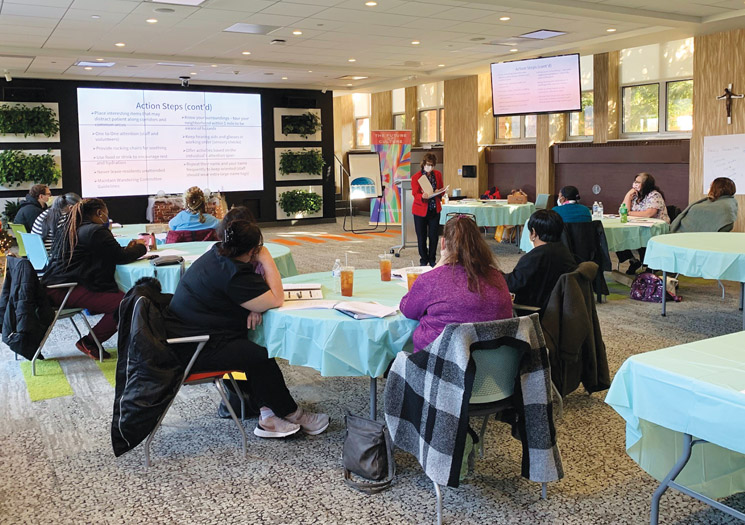
Throughout our 97-year history, Redeemer Health has been committed to helping people of every age and social situation.
To address the distinct caregiving needs of individuals living with Alzheimer’s or other forms of dementia, we now provide a Certified Dementia Practitioner (CDP) credentialing education program. We are one of only three CDP programs offered by hospitals in Pennsylvania.
Our program’s mission is to ensure that all staff members have access to comprehensive education that promotes global standards of excellence in dementia care. We are passionate about achieving CDP certification for all non-physician caregivers and staff who encounter our patients and their families. This includes nurses, aides, social workers, chaplains and recreational therapists, as well as dietary, housekeeping, maintenance and administrative staff.
Donor support helps Redeemer Health cover credentialing fees and all costs associated with the program for our staff. This support also enables professional development for experts who can host certification courses across our 4,000-employee organization. More than 40 members of the caregiving teams at our Life Care communities, in Home Care and at Holy Redeemer Hospital have gained certification since March 2021.
“The skills learned through this program benefit staff professionally and personally by broadening their awareness and sensitivity,” says Joe Ragg, a program donor and Redeemer Health board member. “I am pleased to support educating our team members to care for clients with the most current expertise and utmost compassion.”
As the incidence of dementia is forecast to triple by 2050, you, too, can make a difference by helping prepare our caregivers to meet the needs of fragile individuals. Please consider making a gift in support of our CDP credentialing program.
categories:
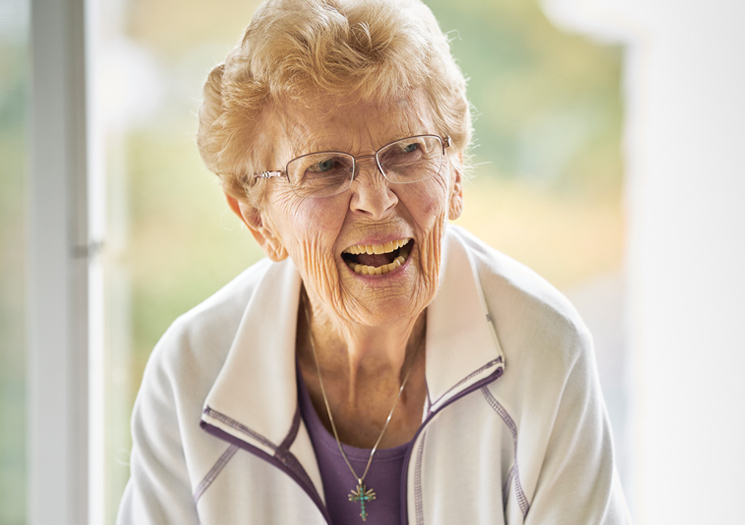
When Betty Bott’s husband, Charles, was treated for cancer at Holy Redeemer Hospital, the staff’s care and compassion inspired her. “You could just feel the spirit,” Betty said. “There’s a genuine caring there.”
After Charles’s cancer journey ended, Betty chose to share her time as a volunteer for Redeemer Health. She’s continued to do so for 30 years, warmly greeting others as a receptionist at the hospital front desk, assisting women coming in for mammograms, serving on the Drueding Center Auxiliary, and other roles whenever asked.
Betty also is one of the most philanthropic and consistent donors to the Redeemer Health system, building an amazing legacy — one she believes Charles would admire. Her support includes a transformational gift to support the lifesaving work at our cancer center.
“I’ve seen many advancements in medicine over the years,” Betty said. “I feel that it is important to keep the progress and innovations available for all patients.”
“Betty’s tremendous generosity has been crucial to helping our cancer program grow,” said Donna Miller, RN, MSN, CCCTM, CNML, Administrative Director, Redeemer Health Cancer Center.
“The team we’ve put together in the cancer center is amazing!” said William L. Scarlett, DO, FACS, FACOS, MHCM, Executive Director, Redeemer Health Cancer Center. “Their compassion and concern for our patients impresses me every day.”
“I was recently invited to hear about the direction of the cancer center,” Betty said. “What I learned that day made my heart so happy. As a people person myself, I was thrilled to learn that a dedicated social worker, a financial aid counselor and more nurse navigators were added to the staff to offer such meaningful support to patients and families.”
“It is really mind boggling to know that my gifts have touched the lives and hearts of so many others,” adds Betty. “I just think of it as something I should do.”
categories:
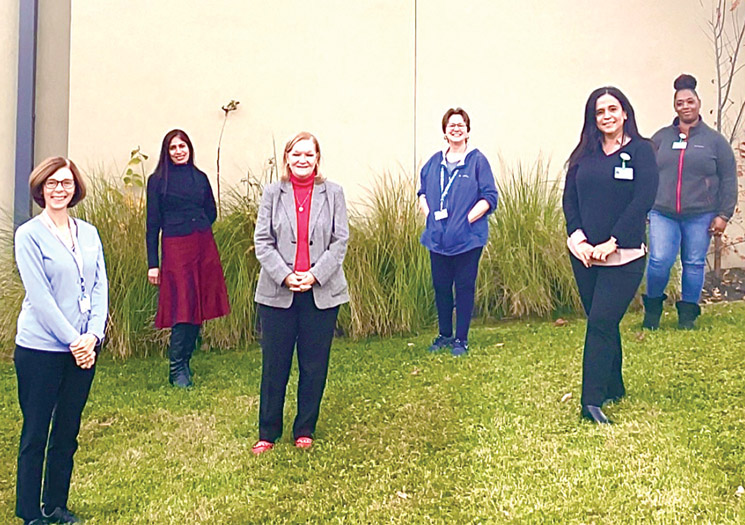
It is hard to imagine being discharged from the hospital with no family in the immediate area, with no form of transportation, while living in an isolated boarding house — and in the middle of a pandemic. This was exactly the situation John* faced in early 2021.
With the help of our generous community funders, including foundations, corporations and individuals, the Redeemer Health Home Care team sprang into action. They got John set up with telehealth to supplement his regular home care visits. Through this technology, which allows health care visits via phone or computer, nurses could communicate with John every day, sometimes several times a day. His vital signs were all monitored electronically right from his home.
The bridges Redeemer Health Home Care built to care for John helped him to make considerable lifestyle changes. With the help of grant funding, we were able to provide him with a scale, oxygen monitor and blood pressure cuff to keep, so he could continue monitoring his health after his discharge. Now he is hopeful and looks forward to resuming a more active life and connecting with his family.
“We are connected to each other as we collaborate daily to deliver care skillfully and safely to our patients,” says Carleen A. Valerio, RN, a Redeemer Heath Home Care and Hospice (NJ) caregiver. “Through our empathy and compassion, our patients realize that we firmly stand behind our mission statement to Care, Comfort, and Heal."
Advancing technology enables us to build more caring bridges. Your gift in support of Home Care helps make this possible.
categories:
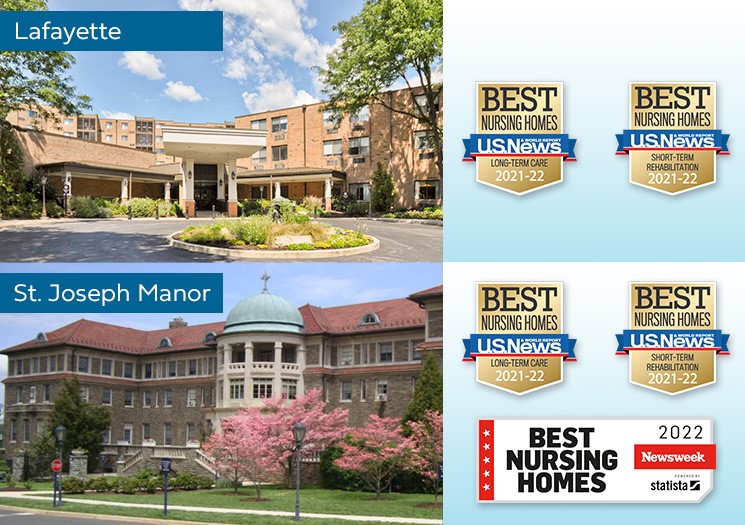
Two Redeemer Life Care communities, Lafayette and St. Joseph Manor, have earned national distinctions for the quality of care they deliver.
US News has awarded a “Best Nursing Home 2022” rating to both communities for the quality of their long-term care and short-stay program. The publication used scientific literature review, discussions with industry experts, and statistical modeling to carefully evaluate 15,298 nursing homes across the country, awarding only 7% of these facilities with a “Best Nursing Home 2022” rating.
“We are proud to have earned a 'Best Nursing Home 2022' rating by US News. This distinction signifies the devotion and dedication that we demonstrate to residents every day. We treat every resident like family and look forward to continuing our legacy of high-quality, compassionate care,” says Joe Munizza, Vice President, Residential Services.
Additionally, St. Joseph Manor has earned Newsweek’s “America’s Best Nursing Homes 2022” rating based on an evaluation done by Statista, a Newsweek partner that looked at performance data drawn from the Centers for Medicare & Medicaid Services (CMS), peer recommendations derived from more than 10,000 medical experts, and metrics around the handling of COVID-19 also drawn from CMS data, as well as other official sources.
Out of 11,849 nursing homes analyzed across the country, Newsweek awarded only 450 with its “Best Nursing Home” rating, with St. Joseph Manor being one of only 26 who earned this distinction in the state of Pennsylvania.
“These distinctions attest to the unwavering focus we maintain to provide high-quality, compassionate care and service. Our staff continued their steadfast dedication to our residents and their health and safety even during the most trying challenges brought on by the COVID-19 pandemic. We are proud to have earned recognition by Newsweek and US News and remain committed to upholding the highest level of quality care,” says Ellie Nocito, Vice President and Administrator, St. Joseph Manor and Redeemer Health Transitional Care Unit.
For more information about Redeemer Health Life Care communities, visit redeemerhealth.org/lifecare.